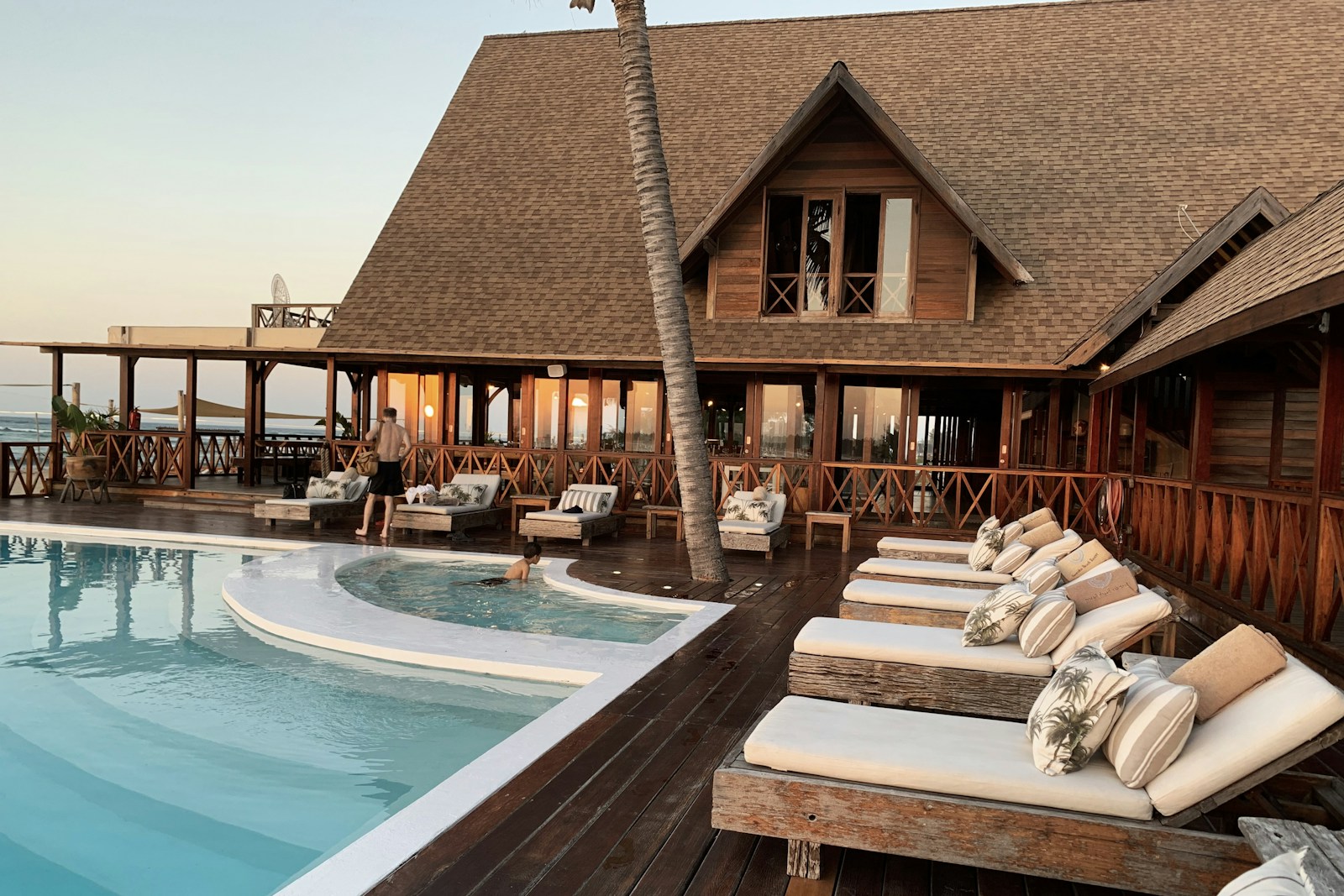
Luxury resort social media looks, from the outside, like the easiest job in marketing. Point a camera at turquoise water, post, repeat. In practice it is one of the hardest — because the job is not to show a beautiful place. It is to make someone rearrange their life and their budget to travel to it. Aspiration, engineered to book rooms.
And the stakes per interaction are unusually high. In luxury hospitality, a single Instagram DM is often a five-figure conversation. Treat the account like a billboard and you leave real revenue in the inbox.
Two properties, two completely different dreams
We ran social for Resorts World across two luxury properties with radically different characters — a tropical island retreat in Bimini, the Bahamas, and a mountain retreat in the Catskills of upstate New York. Same brand umbrella. Almost nothing else in common.
The mistake would be a unified “luxury” content look pasted across both. Luxury is not a filter or a font — it is specificity. So the content diverged completely: turquoise water and over-water villas for Bimini, fireplaces and foliage for the Catskills. Each property had to feel like a place worth traveling for, on its own terms. The luxury is in how precisely you capture what makes that place singular, not in a shared coat of gloss.
The DM is a sales floor, not a comment section
This is where most luxury hospitality accounts leave money on the table. On a resort account, the direct messages are not community chit-chat — they are booking conversations worth thousands of dollars each. Someone asking “what’s availability like in March?” is a qualified lead mid-decision. Community management has to be run with that understanding: fast, informed, and treated as the front end of the sales process, because it is.
What luxury resort social actually requires
- Aspiration with intent. Beautiful is table stakes. The content has to move someone from admiring to booking — occasion, season, and offer woven in, not just scenery.
- Respect for the specificity of place. A portfolio of luxury properties needs each one to feel singular. Sameness is the opposite of luxury.
- DMs run like a sales floor. Resort inquiries are high-value leads. The response time and quality of a DM directly affects bookings.
How to vet an agency for a luxury property
Ask whether they understand that resort social is a revenue channel, not a brand-awareness exercise — and whether they can hold two properties’ distinct identities without collapsing them into one generic luxury look. Plenty of agencies can make a pretty grid. Far fewer treat the inbox as a sales floor and the feed as a booking engine.
We have run hospitality social since 2008 across resorts, attractions, and hotels, and the principle holds every time: luxury social scales across property types only when the strategy respects the specificity of the place.
Building a luxury resort or hospitality brand’s presence? See how we approach luxury → or start a conversation →
How is social media for luxury resorts different from other hotels?
Luxury resort social has to sell aspiration that converts to high-value bookings, and its direct messages are often five-figure sales conversations rather than casual community chat. The content must capture what makes each specific property singular — sameness reads as the opposite of luxury — and the inbox must be run like a sales floor.
Should a resort brand use the same content across all its properties?
No. Luxury is specificity. We ran two Resorts World properties — Bimini in the Bahamas and the Catskills in upstate New York — with completely distinct content because each had to feel like a place worth traveling for on its own terms. A unified “luxury look” pasted across different properties flattens exactly what makes each one desirable.
Why do resort social media DMs matter so much?
On a luxury resort account, direct messages are frequently booking conversations worth thousands of dollars each. An inquiry about availability is a qualified lead mid-decision, so community management functions as the front end of the sales process — response speed and quality directly affect revenue.